

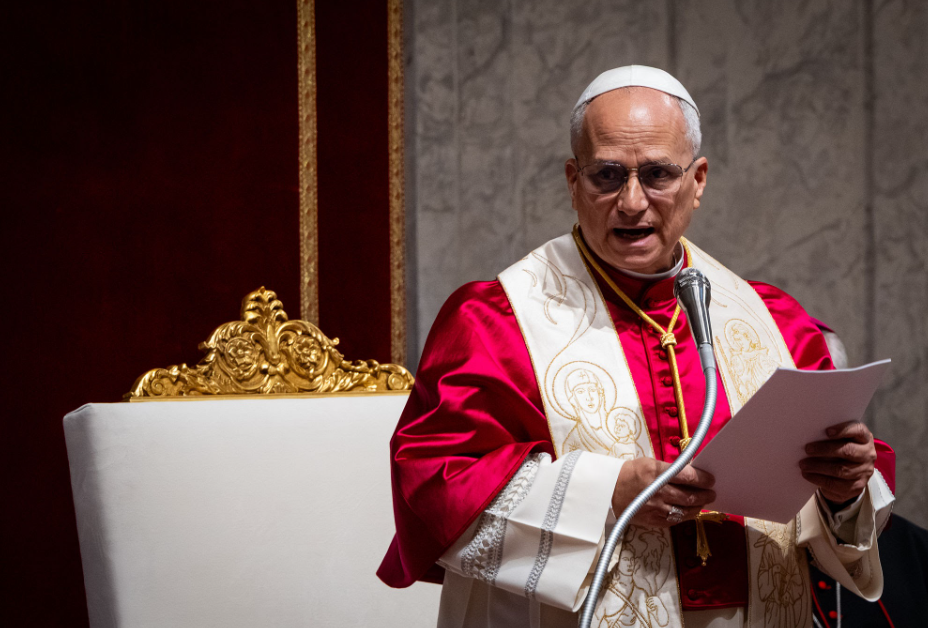

The Pope's first Encyclical, on Safeguarding the Human Person in the World of Artificial Intelligence (AI).





THE SUMMARY OF MAGNIFICA HUMANITAS CHAPTER - BY - CHAPTER
Pope Leo XIV’s First Encyclical
INTRODUCTION
“Humanity at the Crossroads”
Pope Leo XIV opens the encyclical by reflecting on the rapid growth of artificial intelligence and digital technology. He acknowledges the blessings of scientific progress but warns that humanity is entering a decisive moral moment. The Pope insists that technology without wisdom can endanger the human soul, human freedom, and social harmony.
He states clearly:
“Human dignity must remain the center and measure of all technological development.”
CHAPTER I
THE SACRED DIGNITY OF THE HUMAN PERSON
The first chapter lays the theological foundation of the encyclical. Pope Leo XIV teaches that every human being is created in the image and likeness of God and therefore possesses an inviolable dignity that no machine, government, or economic system can take away.
Key Themes:
* Human beings are not products or data.
* Technology must serve life, not dominate it.
* The soul, conscience, and freedom distinguish humanity from machines.
* Human relationships cannot be replaced by artificial intelligence.
Central Message:
The Pope warns against a culture that values efficiency more than humanity.
CHAPTER II
ARTIFICIAL INTELLIGENCE AND MORAL RESPONSIBILITY
This chapter examines the opportunities and dangers of AI. Pope Leo XIV acknowledges that AI can assist medicine, education, communication, and scientific research. However, he warns that intelligence without morality becomes dangerous.
Key Concerns:
* Lack of ethical oversight
* Manipulation of information
* Loss of privacy
* Dependence on machines
* Dehumanization of society
The Pope’s Appeal:
Scientists, engineers, political leaders, and educators must ensure that AI develops according to moral principles rooted in truth and justice.
CHAPTER III
THE CRISIS OF TRUTH IN THE DIGITAL AGE
Here, the Pope reflects on misinformation, deepfakes, propaganda, and digital manipulation. He laments that technology can now fabricate reality and confuse societies.
Key Themes:
* Fake news weakens democracy.
* Digital lies destroy trust.
* Social media can become a tool of division and hatred.
* Young people are especially vulnerable.
Spiritual Reflection:
The Pope reminds Christians that Jesus Christ is “the Truth” and calls believers to become witnesses of truth, integrity, and responsible communication.
CHAPTER IV
WORK, ECONOMY, AND HUMAN DIGNITY
This chapter strongly echoes Catholic social teaching, especially Rerum Novarum. Pope Leo XIV discusses automation, unemployment, and growing inequality caused by technological systems.
Key Points:
* Human labor is sacred.
* Workers must never be treated as disposable.
* Technology should assist workers, not replace human dignity.
* Poor nations must not become victims of digital colonialism.
Strong Warning:
The Pope condemns systems that enrich a few while millions suffer economic exclusion.
CHAPTER V
WARFARE, PEACE, AND AUTONOMOUS WEAPONS
One of the most powerful sections of the encyclical addresses artificial intelligence in military technology.
The Pope Condemns:
* Autonomous killing machines
* AI-guided warfare without human accountability
* Technological arms races
* Dehumanized violence
Central Teaching:
No machine should ever possess the authority to decide who lives or dies.
The Pope calls world leaders to pursue peace, dialogue, and international cooperation.
CHAPTER VI
THE NEW FORMS OF SLAVERY
In this deeply reflective chapter, Pope Leo XIV revisits the painful history of slavery and exploitation.
Historic Moment:
The Pope renews the Church’s sorrow for its delayed condemnation of the transatlantic slave trade.
Modern Application:
He compares historical slavery to:
* Human trafficking
* Exploitative labor systems
* Digital exploitation
* Economic oppression
* Technological control over vulnerable populations
Message:
Every form of exploitation is an offense against God and human dignity.
CHAPTER VII
THE TOWER OF BABEL AND THE TEMPTATION OF POWER
Drawing from Genesis 11, the Pope compares uncontrolled technological ambition to the Tower of Babel.
Key Reflection:
Humanity risks seeking greatness without God, wisdom, or humility.
The Pope Warns Against:
* Pride in technological achievement
* Worship of progress without morality
* The illusion that science alone can save humanity
Spiritual Insight:
True progress must include spiritual growth, compassion, and reverence for God.
CHAPTER VIII
THE CHURCH’S MISSION IN THE DIGITAL ERA
The final chapter focuses on the role of the Church in guiding humanity through the technological age.
The Pope Calls the Church To:
* Defend truth and human dignity
* Protect the poor and vulnerable
* Promote ethical education
* Encourage responsible use of technology
* Remain a voice of conscience in society
Hopeful Conclusion:
The Pope emphasizes that humanity still has the freedom to choose wisdom, solidarity, peace, and love.
CONCLUSION
“Toward a Civilization of Love”
Pope Leo XIV concludes by calling humanity to build a civilization rooted not in fear, domination, or greed, but in love, justice, truth, and reverence for human life.
He entrusts the future of humanity to God and invites all people — believers and nonbelievers alike — to work together for a world where technology remains a servant of humanity and never its master.
Fr. Cyriacus Kamai